
When people begin learning about personal finance, they usually focus on budgeting, saving money, paying off debt, and investing. These are essential skills, but financial education goes beyond managing the money that comes into your bank account. It also involves understanding how currencies work, why their values change, and how those changes can affect your purchasing power, investments, and long-term financial goals.
Two of the most important currencies in the global economy are the United States dollar (USD) and the euro (EUR). Both play major roles in international trade, financial markets, tourism, and investment. However, they are not the same, and understanding their differences can help you make better financial decisions.
For someone living in Brazil, this knowledge is especially valuable. The dollar and the euro can influence the price of imported products, international travel, online subscriptions, investments abroad, and even some costs associated with everyday life.
But here is an important distinction: a strong currency is not automatically the best currency for your financial goals, and a currency that becomes more expensive is not necessarily a good investment.
Financial education means learning how to interpret these movements instead of reacting to headlines or trying to predict every change in the exchange rate.
In this guide, we will explore the main differences between the dollar and the euro, how each currency works, how exchange rates affect personal finances, and how to use this knowledge to build a more informed financial strategy.
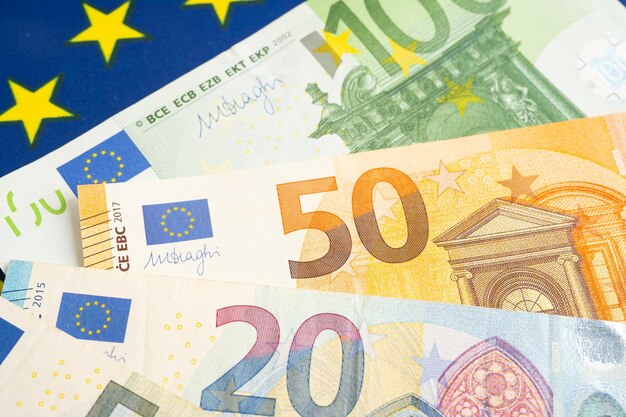
1. Understanding the Dollar and the Euro
Before comparing the two currencies, it is important to understand where they come from and how they are used.
The United States Dollar (USD)
The United States dollar is the official currency of the United States and one of the most influential currencies in the world.
It is widely used in international trade, financial transactions, and global investment markets. Many commodities, including oil and gold, are commonly priced in dollars. In addition, central banks around the world hold dollar-denominated assets as part of their international reserves.
The dollar’s global importance is connected to several factors:
- The size and influence of the United States economy.
- The depth and liquidity of US financial markets.
- The dollar’s extensive use in international trade and finance.
- The role of US Treasury securities in global financial markets.
- The confidence many international investors place in US institutions and markets.
For individuals, the dollar is particularly relevant when purchasing products from American companies, traveling to the United States, investing in US assets, or buying services priced in USD.
The Euro (EUR)
The euro is the common currency used by the countries that belong to the euro area. It is managed within the Eurosystem, which includes the European Central Bank (ECB) and the national central banks of euro-area countries.
The euro is one of the world’s major international currencies. It facilitates trade, travel, payments, and investment across the countries that use it.
Its importance is supported by factors such as:
- The economic activity of the euro area.
- The size of European financial markets.
- The euro’s role in international trade and investment.
- The credibility of the European Central Bank.
- The integration of participating European economies.
The euro is especially useful for people who travel to countries such as France, Italy, Spain, Germany, Portugal, and other euro-area destinations.
However, an important detail is that not every country in Europe uses the euro. For example, the United Kingdom uses the pound sterling, while Switzerland uses the Swiss franc.
This matters because a person planning a European trip may need different currencies depending on the countries they visit.
2. Dollar vs. Euro: What Are the Main Differences?
Although both currencies are important globally, their economic environments and practical uses differ.
| Feature | US Dollar (USD) | Euro (EUR) |
|---|---|---|
| Issuing monetary authority | Federal Reserve System | European Central Bank and Eurosystem |
| Main economic area | United States | Euro area |
| Global role | Leading international reserve and transaction currency | Major international reserve and transaction currency |
| Common international use | Trade, commodities, finance, and investment | Trade, finance, travel, and investment |
| Monetary policy | Influenced by US economic conditions and Federal Reserve decisions | Influenced by euro-area economic conditions and ECB decisions |
| Main economic context | One national economy, with substantial global influence | A shared currency across multiple countries |
| Travel relevance | Essential for travel and purchases in the United States | Essential for travel and purchases in euro-area countries |
| Brazilian consumer impact | Affects dollar-priced goods, services, and investments | Affects euro-priced goods, services, and investments |
The most important difference is not simply that one currency is called the dollar and the other the euro. It is that each responds to different economic conditions, monetary policies, and investor expectations.
The dollar reflects developments in the US economy and its financial system. The euro reflects conditions across a group of economies that share a currency and monetary policy.
Both can appreciate or depreciate against the Brazilian real, sometimes in different directions.
3. Why Do Exchange Rates Change?
One of the most important lessons in financial education is understanding that currency prices are not fixed.
The exchange rate between the Brazilian real and another currency changes according to supply, demand, economic expectations, interest rates, international investment flows, and other factors.
Imagine that you want to buy US dollars with Brazilian reais. The price you pay will depend partly on the market exchange rate and partly on the costs charged by the financial institution handling the transaction.
The same principle applies when buying euros.
Interest rates
Interest rates influence how attractive a country’s financial assets may be to international investors.
When interest rates in the United States rise relative to those in other countries, some investors may become more interested in dollar-denominated assets. This can increase demand for dollars, although the actual effect depends on expectations, risk, and other economic conditions.
The same principle applies to the euro area and the European Central Bank’s monetary policy.
However, higher interest rates do not guarantee that a currency will appreciate. Markets often react to what investors expect to happen next, not only to the latest announcement.
Inflation
Inflation reduces the purchasing power of money over time.
If prices rise significantly in one economy, its currency may face pressure over the longer term. But the relationship between inflation and exchange rates is complex. A currency can appreciate even when its domestic inflation is relatively high if other forces dominate the market.
For personal finance, the practical lesson is straightforward: consider both the currency’s exchange rate and the prices you will actually pay.
Economic growth and productivity
Investors pay attention to economic growth, employment, productivity, corporate performance, and political and institutional stability.
Stronger economic prospects can increase demand for a country’s financial assets, potentially supporting its currency.
Nevertheless, financial markets are forward-looking. A currency can fall even when economic data look positive if investors had expected even better results.
Political uncertainty and global crises
During periods of uncertainty, investors may seek assets they perceive as more liquid or reliable.
The dollar has often benefited from its role in global finance during periods of market stress, although this is not guaranteed. The euro can also strengthen or weaken depending on the nature of the crisis and how investors assess the European economy.
For someone learning about personal finance, the key point is that currency movements reflect a combination of factors rather than a single cause.
4. Why the Dollar Is So Important in the Global Economy
The dollar occupies a central position in the international financial system.
Many international transactions are conducted in dollars, including transactions between countries that do not use the US currency domestically. Companies may also use dollars to price commodities, settle international contracts, or finance operations.
This widespread use creates a reinforcing effect: because many participants already use dollars, the currency remains convenient for other participants.
For Brazilian consumers, the dollar’s importance can appear in several ways.
Imported products
Some imported goods and the components used to manufacture products in Brazil are priced in dollars.
When the dollar becomes more expensive relative to the real, the cost of importing those goods can increase. Businesses may pass some of that increase on to consumers, depending on competition, contracts, inventories, taxes, and other expenses.
This can affect electronics, machinery, industrial inputs, and other products with international supply chains.
International travel
A trip to the United States involves expenses such as accommodation, food, transportation, shopping, and attractions.
If the dollar rises against the real, the same dollar-priced expense generally requires more reais.
For example, suppose you plan to spend US$2,000 during a trip.
If the exchange rate is R$5.00 per dollar, the equivalent is R$10,000 before fees and taxes.
If the rate rises to R$5.50, the same US$2,000 becomes R$11,000.
That is an additional R$1,000 without any increase in the number of dollars you plan to spend.
International investments
The dollar is also relevant for Brazilian investors who want exposure to US stocks, bonds, exchange-traded funds, or other dollar-denominated assets.
However, the dollar’s importance does not mean every investor should hold large amounts of it. The appropriate allocation depends on financial goals, time horizon, risk tolerance, liquidity needs, and the other assets in the portfolio.
5. Why the Euro Matters in Personal Finance
The euro plays a similar international role, but its practical importance is particularly visible when dealing with European travel, business, and investments.
European travel
If you plan to visit France, Italy, Spain, Portugal, or another euro-area country, many of your everyday expenses will be priced in euros.
Imagine that your planned travel budget is €1,500.
At an exchange rate of R$5.80 per euro, the equivalent is R$8,700 before fees and taxes.
If the euro rises to R$6.10, the same €1,500 becomes R$9,150.
The difference is R$450.
This example shows why exchange-rate planning matters. Even when your itinerary and spending habits remain unchanged, currency fluctuations can affect your total travel budget.
European goods and services
The euro can also affect the price of European products, services, and business transactions.
A Brazilian company purchasing equipment from a euro-area supplier may face higher costs if the euro appreciates against the real. A consumer buying a product priced in euros may experience the same effect.
European investments
Investors can gain exposure to European companies and markets through suitable financial instruments, including funds that invest in European assets.
However, holding euros in cash is not the same as investing in European companies. The currency itself may rise or fall, while the value of investments depends on the performance of the underlying assets as well as currency movements.
Financial education helps distinguish these different sources of risk and return.
6. Is the Dollar Stronger Than the Euro?
This question is common, but the answer depends on what you mean by “stronger.”
A currency can have a higher nominal value per unit without necessarily being more economically powerful, more stable, or a better investment.
For example, if one euro exchanges for more than one dollar, that does not automatically mean the euro is superior to the dollar. The numerical exchange rate between two currencies is not a direct measurement of the strength of their economies.
It is useful to distinguish three concepts.
Nominal exchange rate: How many units of one currency can be exchanged for another.
Purchasing power: How much goods and services a given amount of money can buy in a particular place.
International influence: How extensively a currency is used in trade, investment, reserves, and financial transactions.
The dollar has a particularly prominent position in global finance. The euro is also a major international currency. Their nominal exchange rate alone does not tell you which one is better for a particular financial decision.
A traveler should focus on the currency needed for the destination. An investor should focus on the assets, risks, costs, and objectives involved.
7. How Exchange Rates Affect Your Purchasing Power
Purchasing power is one of the most practical concepts in financial education.
It refers to the quantity of goods and services that your money can buy.
For someone earning and spending in Brazilian reais, the cost of a product priced in dollars or euros depends on the exchange rate, transaction costs, and any applicable taxes.
Consider the following hypothetical example.
| Expense | Price in foreign currency | Exchange rate | Equivalent in reais |
|---|---|---|---|
| Online service | US$20 | R$5.00/USD | R$100 |
| Online service | US$20 | R$5.50/USD | R$110 |
| European hotel | €150 | R$5.80/EUR | R$870 |
| European hotel | €150 | R$6.10/EUR | R$915 |
The foreign-currency prices remain unchanged, but the cost in reais increases.
The same principle can work in reverse. If the real strengthens against a foreign currency, certain imported purchases and international expenses may become less expensive in reais.
However, the final price can also be affected by taxes, shipping, local pricing policies, payment-provider fees, and changes in the seller’s price.
A practical financial education exercise
Choose three expenses that you might pay in dollars or euros:
- An international subscription.
- A product you want to purchase from abroad.
- A future travel expense.
Calculate how much each costs at today’s available exchange rate, then repeat the calculation with a rate that is 5% higher.
This simple exercise reveals how sensitive your budget is to currency movements.
It also encourages you to build a financial cushion instead of planning every expense using the most favorable exchange rate.
8. Should You Save in Dollars or Euros?
There is no universal answer. The right choice depends on what you are saving for.
A useful principle is to match the currency of your savings to the currency of your future expenses when doing so is practical and appropriate.
If your goal is to travel to the United States
Holding some dollars before the trip may help you reduce uncertainty about the amount of reais you will need.
You do not need to convert your entire budget at once. You might choose to purchase part of the amount over several months, provided the fees are reasonable and the money is available for the trip.
If your goal is to travel to Europe
If your planned expenses are mostly in euros, saving in euros can provide a more direct match for those expenses.
This can be useful because the total budget for a European trip is ultimately determined by how many euros you need, not by whether the dollar is performing well.
If your goal is to build long-term wealth
The decision becomes more complex.
You should consider your emergency fund, debts, time horizon, investment diversification, and the assets you already own.
For example, someone who has all their income, savings, and investments tied to Brazil may benefit from considering international diversification. But that does not mean converting all their savings into foreign currency.
A person with high-interest debt and no emergency reserve may need to prioritize those issues before taking on additional currency exposure.
The objective is not to own foreign currency simply because it is foreign. The objective is to make your financial resources better suited to your needs.
9. Is Holding Dollars or Euros an Investment?
This distinction is essential.
Buying a foreign currency can protect the value of money intended for future expenses in that currency. It can also create an opportunity for gains if the exchange rate moves favorably.
But holding dollars or euros does not automatically generate income.
If you buy US$1,000 and keep it in cash, your result in reais depends primarily on the exchange rate when you convert it back, after accounting for transaction costs and any applicable taxes.
Suppose you purchase US$1,000 when the exchange rate is R$5.00.
Your initial amount is R$5,000 before costs.
If the exchange rate later reaches R$5.50, your US$1,000 would be worth R$5,500 before costs.
That represents a nominal gain of R$500 relative to the initial exchange-rate value.
However, if the exchange rate falls to R$4.70, the same US$1,000 would be worth R$4,700 before costs.
You could therefore experience a loss when measured in reais.
The same logic applies to euros.
What about inflation?
Even if the exchange rate rises, you should consider the purchasing power of the currency you hold.
Inflation in the United States or euro area can reduce the amount of goods and services that a fixed amount of foreign currency buys over time.
In addition, the real value of any gain depends on Brazilian inflation, transaction costs, and the opportunity cost of leaving money in one asset rather than another.
What about interest-bearing accounts and investments?
Some foreign-currency accounts and investment products may offer interest or investment returns. However, the return depends on the product, its risks, fees, tax treatment, and the financial institution.
A dollar-denominated investment is not automatically safe simply because it is denominated in dollars. Likewise, an investment denominated in euros can lose value.
Before investing, understand what you are buying, how the return is generated, whether your principal can fluctuate, and what protections or restrictions apply.
10. Dollar, Euro, and the Brazilian Real: Three Different Perspectives
For Brazilian residents, comparing the dollar and the euro without considering the real leaves out an important part of the picture.
The real is the currency in which most domestic income, bills, and financial obligations are paid.
This means your financial life involves at least three relevant perspectives.
Perspective 1: Your domestic purchasing power
If you earn R$8,000 per month and your essential expenses are in Brazil, your immediate financial stability depends heavily on your income, expenses, debt obligations, and the purchasing power of the real.
A stronger dollar does not necessarily improve your financial situation. In fact, it may increase the cost of imported products and international travel.
Perspective 2: Your international purchasing power
If you plan to travel abroad or buy foreign goods, the exchange rate becomes much more important.
Your income may remain unchanged in reais, while the amount of foreign currency you can purchase decreases.
This is why international plans should include an exchange-rate buffer.
Perspective 3: Your long-term financial diversification
If you want to invest internationally, foreign-currency exposure may help diversify your financial resources.
But diversification should be based on your overall portfolio and goals rather than an assumption that one currency will always appreciate.
These perspectives can coexist. You can manage your domestic budget in reais, save in euros for a European trip, and maintain international investments for long-term diversification.
Each decision serves a different purpose.
11. Should You Buy Dollars or Euros When the Price Falls?
It can be tempting to think that a lower exchange rate automatically creates a buying opportunity.
But determining whether a currency is cheap or expensive is difficult. A currency can fall further after you buy it, or rise even when the original reason for purchasing it seems weak.
The first question should be: What is the purpose of buying this currency?
If you need euros for a trip in six months, waiting for the perfect exchange rate could create unnecessary uncertainty.
If you are considering foreign currency as part of a long-term investment strategy, the decision should involve your broader portfolio, the expected costs, and your tolerance for losses.
A practical alternative: phased purchases
For a planned expense, one approach is to purchase smaller amounts over time instead of converting the entire budget on a single day.
For example, if you need €1,200 in six months, you might divide the planned amount into several purchases.
This reduces your dependence on one specific exchange rate, although it does not guarantee a better average price or eliminate currency risk.
You should also compare the total cost of each transaction. If every purchase involves a substantial fixed fee, making too many small transactions may be inefficient.
The method should fit both your timeline and the fees charged by your provider.
12. How to Compare Currency Exchange Services
Financial education also means understanding that the exchange rate displayed in the news is not necessarily the rate you will receive.
The market reference rate and the final consumer rate can differ.
When comparing services, examine the total cost of the transaction.
Important factors include:
- The exchange rate offered by the provider.
- The spread between the reference rate and the rate offered to you.
- Service fees and transfer charges.
- Applicable taxes, including IOF where relevant.
- Card conversion policies and possible additional charges.
- ATM withdrawal fees when traveling.
- Whether the provider uses a fixed or variable exchange rate.
- Any limits, restrictions, or conditions.
For example, one provider might advertise a low transaction fee but offer a less favorable exchange rate. Another might charge a visible fee while providing a better overall conversion.
The best comparison is the amount of foreign currency you actually receive for a given amount of reais, after all applicable costs.
Before making a transaction, ask yourself:
- How many reais will I pay in total?
- How many dollars or euros will I receive?
- Are there additional fees or taxes?
- What happens if I need to convert the money back?
- Is this transaction necessary now, or can it be planned over time?
These questions can prevent small costs from accumulating into significant expenses.
13. Using Dollars and Euros in International Investments
International investing is one area where currency education becomes particularly important.
A Brazilian investor can gain exposure to foreign markets through different financial instruments, depending on availability, eligibility, and the investment provider.
Examples include international funds, exchange-traded funds, stocks, bonds, and certain locally available products linked to international assets or exchange rates.
However, there is a fundamental distinction between investing in a currency and investing in an asset denominated in that currency.
Currency exposure
Suppose you hold an investment whose value is linked primarily to the dollar.
Your result in reais may depend significantly on how the dollar moves against the real, along with the product’s costs and any other factors affecting its value.
Asset exposure
Suppose you buy shares in a US company.
Your result may depend on the company’s earnings, business prospects, valuation, market conditions, and the exchange rate between the dollar and the real.
Even if the dollar appreciates, the shares could decline enough to produce a loss.
The opposite can also occur: an investment might rise in value while the foreign currency weakens.
Why this distinction matters
A currency is not a substitute for a diversified investment portfolio.
If your objective is long-term wealth building, you need to understand the underlying investments, their risks, and how they fit into your financial plan.
International exposure can broaden your opportunities, but it also introduces additional variables.
Before choosing an investment, examine the product’s structure, fees, liquidity, tax implications, and the risks associated with both the underlying assets and the exchange rate.
14. Common Mistakes People Make When Thinking About the Dollar and Euro
Learning about currencies is not only about understanding economic theory. It is also about avoiding costly decisions.
Mistake 1: Believing that the dollar always rises
The dollar has an important role in global finance, but its exchange rate fluctuates.
Economic conditions, interest-rate expectations, investor sentiment, and global events can all affect its value.
No currency appreciates continuously.
Mistake 2: Assuming that the euro is always more expensive
The numerical price of a euro relative to a dollar does not tell you which currency is better or which economy is stronger.
A higher unit price is not a reliable measure of investment quality.
Mistake 3: Buying foreign currency without a clear objective
Buying dollars or euros simply because someone says they will rise can turn financial planning into speculation.
Before making a purchase, determine whether you are preparing for a trip, paying an international expense, diversifying investments, or pursuing a short-term currency trade.
These objectives involve different decisions and risks.
Mistake 4: Ignoring transaction costs
A currency transaction can look attractive until you include the exchange-rate spread, fees, taxes, and conversion costs.
Always evaluate the net result.
Mistake 5: Using money needed for essential expenses
Foreign-currency exposure can be unsuitable for money that must be available soon to pay rent, bills, debt installments, or other essential expenses.
If the exchange rate moves against you, you may be forced to convert the money at an unfavorable time.
Mistake 6: Confusing exchange-rate gains with real wealth creation
A currency can appreciate against the real, but that does not mean the entire financial strategy is successful.
You should also consider inflation, costs, risk, and what the money is intended to accomplish.
Mistake 7: Trying to predict the perfect moment
Even experienced market participants can be wrong about currency movements.
For many personal financial goals, consistent planning and sensible risk management are more useful than attempting to identify the exact market bottom or top.
15. A Practical Framework for Managing Foreign Currency
You do not need to become an economist to make better decisions about dollars and euros.
You need a clear process.
Step 1: Define your objective
Write down why you want exposure to a foreign currency.
Is it for travel, an international purchase, education abroad, business expenses, or long-term investing?
Your objective determines the relevant currency, the amount needed, and the timeline.
Step 2: Calculate the amount you need
Estimate the total expense in foreign currency.
If your trip requires €2,000, for example, focus on the number of euros you need rather than making your entire decision around the dollar’s performance.
Add a reasonable buffer for unexpected expenses and exchange-rate changes.
Step 3: Establish a timeline
A planned expense in three months is different from a long-term investment objective extending over ten years.
The shorter your timeline, the less room you may have to tolerate unfavorable exchange-rate movements.
Step 4: Compare the total cost
Check the available rates and transaction costs from reputable providers.
Compare the final amount of currency received, not just the advertised fee.
Step 5: Decide whether to convert everything at once
Depending on the timeline, fees, and your preference for certainty, you may choose to convert all or part of the amount in advance.
Phased purchases can spread the timing risk, but they do not guarantee a lower cost.
Step 6: Review the decision periodically
For a travel fund, review whether you are on track to accumulate the required amount.
For an investment portfolio, review your overall allocation, risks, and goals rather than reacting to every daily movement in the exchange rate.
The purpose of this process is to make currency decisions part of your financial plan instead of allowing market headlines to dictate your behavior.
16. A Simple Comparison Exercise: Which Currency Fits Your Goal?
Consider three hypothetical situations.
Situation A: You are planning a trip to New York in six months.
Your expenses will mostly be in dollars. Saving some money in dollars may help you reduce uncertainty about the cost of the trip.
Situation B: You are planning to spend two weeks in Spain and Italy.
If most of your expenses will be in euro-area countries, the euro is the more directly relevant currency for your travel fund.
Situation C: You want to build wealth over the next fifteen years.
This is not simply a choice between dollars and euros. You should consider your domestic financial stability, emergency reserve, debts, investment horizon, diversification, and access to suitable international investments.
In each situation, the currency decision changes because the objective changes.
Test your understanding
Imagine that you have R$10,000 available. You are debt-free, have an emergency reserve, and want to use the money for one of the following purposes.
- Travel to the United States in eight months.
- Travel to Europe in eight months.
- Invest for retirement over the next fifteen years.
The most appropriate starting point is not to ask which currency will appreciate the most.
It is to ask which currency exposure, if any, best matches the goal and its timeline.
For the first situation, the dollar is directly relevant. For the second, the euro is directly relevant. For the third, the decision requires a broader investment analysis.
This is the central principle of financial education: the best financial decision is the one that fits the objective, not necessarily the one that looks most attractive in the moment.
17. How to Build Financial Knowledge About Global Currencies
If you want to become more confident in financial decisions, make currency education part of your regular learning routine.
You can start with a few simple habits.
Follow exchange rates without obsessing over daily changes
Observe how the dollar and euro move against the real over weeks and months.
Try to connect major movements with economic news, interest-rate decisions, and international events.
The goal is to understand the forces influencing the market, not to predict every fluctuation.
Learn the difference between market rates and consumer rates
The exchange rate reported in financial news may differ from the rate offered by a bank, exchange service, or card provider.
Understanding this difference helps you evaluate the actual cost of international transactions.
Study interest rates and inflation
These concepts help explain why currencies and financial assets move.
You do not need advanced mathematical knowledge to understand the basic relationships. Start with the purpose of monetary policy, how central banks influence borrowing costs, and how inflation affects purchasing power.
Connect global economics to your own budget
Whenever the dollar or euro moves significantly, ask yourself whether it affects your actual expenses.
If you have no international expenses or investments, the immediate impact on your personal budget may be limited, although indirect effects can still occur through imported products and other prices.
If you are planning a trip or paying for foreign services, the impact may be much more direct.
Use reliable information
For a better understanding of the dollar and euro, consult official and established sources such as the Central Bank of Brazil, the US Federal Reserve, the European Central Bank, and reputable financial publications.
These sources can help you distinguish economic data from speculation and unsupported predictions.
18. A 30-Day Plan to Improve Your Currency Knowledge
You can turn the concepts in this guide into a practical learning routine.
Week 1: Understand the basics
Learn what an exchange rate is, how currencies are traded, and why the dollar and euro have international importance.
Calculate how much US$100 and €100 would cost in reais using available reference rates.
Week 2: Study the factors that influence currencies
Focus on interest rates, inflation, economic growth, and international uncertainty.
Choose one significant movement in the dollar or euro and investigate the main factors that may have contributed to it.
Avoid assuming that a single headline fully explains the movement.
Week 3: Calculate the impact on your finances
Identify any expenses you have in dollars or euros.
Calculate their current cost in reais and compare it with the cost if the relevant currency appreciated by 5%.
If you are planning a trip, use your estimated travel budget for this exercise.
Week 4: Create a personal strategy
Decide whether foreign currency is relevant to your current goals.
If you need money for a trip, create a savings schedule. If you are considering international investments, study the available instruments, their costs, and their risks before investing.
If foreign currency is not relevant to your immediate objectives, you do not need to buy it simply to follow a financial trend.
At the end of the month, you should have a clearer understanding of exchange rates and a more practical approach to making decisions involving international currencies.
Frequently Asked Questions
Is the dollar safer than the euro?
Neither currency is universally safer in every situation. The dollar has a particularly important role in global finance, while the euro is also widely used internationally. The relevant risks depend on your objective, the period involved, and whether you hold cash, deposits, or investments.
Is it better to save in dollars or euros?
It depends on what you are saving for. Dollars are more directly relevant to expenses in the United States, while euros are more directly relevant to expenses in the euro area. For long-term wealth building, the decision should be part of a broader financial and investment strategy.
Can I lose money by buying dollars or euros?
Yes. If the currency depreciates against the real, the amount you receive when converting it back may be lower than what you originally paid. Transaction costs and inflation can also affect your result.
Does a rising dollar mean Brazil’s economy is getting worse?
Not necessarily. The dollar-real exchange rate reflects many factors, including US economic conditions, Brazilian economic conditions, interest-rate expectations, international capital flows, and global uncertainty. A movement in the exchange rate should not be interpreted as a complete assessment of a country’s economy.
Should beginners invest internationally?
International investing can be useful, but it is important to understand the product, costs, risks, and tax implications. Beginners should first understand their own financial situation, establish an appropriate emergency reserve, and evaluate expensive debt before committing money to investments that may fluctuate in value.
Does buying dollars or euros protect me from inflation?
Not automatically. Foreign currency exposure may diversify some risks, but inflation in the currency’s home economy can reduce its purchasing power. Exchange-rate changes can also produce gains or losses when measured in reais.
Should I wait for the dollar or euro to fall before buying?
Trying to identify the perfect moment is difficult. If you have a planned expense, a purchase schedule that fits your timeline and transaction costs may be more practical than waiting indefinitely for a specific exchange rate. No strategy guarantees a favorable outcome.
Conclusion: Understanding Currency Is Understanding Your Financial Choices
The dollar and the euro are two of the most important currencies in the world, but their significance for your personal finances depends on how you use them.
The dollar plays a central role in international trade, financial markets, and global investment. The euro connects the monetary systems of participating European countries and is especially relevant for people who travel, work, do business, or invest in the euro area.
Both currencies can influence purchasing power, international expenses, and investment results. Both can appreciate or depreciate against the Brazilian real. Neither should be treated as a guaranteed source of profit.
The most important lesson is that financial education is not about predicting which currency will rise tomorrow. It is about understanding the factors that influence currency values, recognizing the risks involved, comparing transaction costs, and aligning financial decisions with your goals.
If you are planning a trip, focus on the currency you will actually spend. If you are making an international purchase, calculate the full cost in reais. If you are investing for the long term, evaluate foreign-currency exposure within a diversified financial strategy.
You do not need to follow every market movement or buy foreign currency to become financially educated. You need to understand when currencies matter, how they affect your choices, and how to make decisions based on a clear plan rather than fear, excitement, or speculation.
Financial independence begins when you stop reacting to money and start understanding how it works.